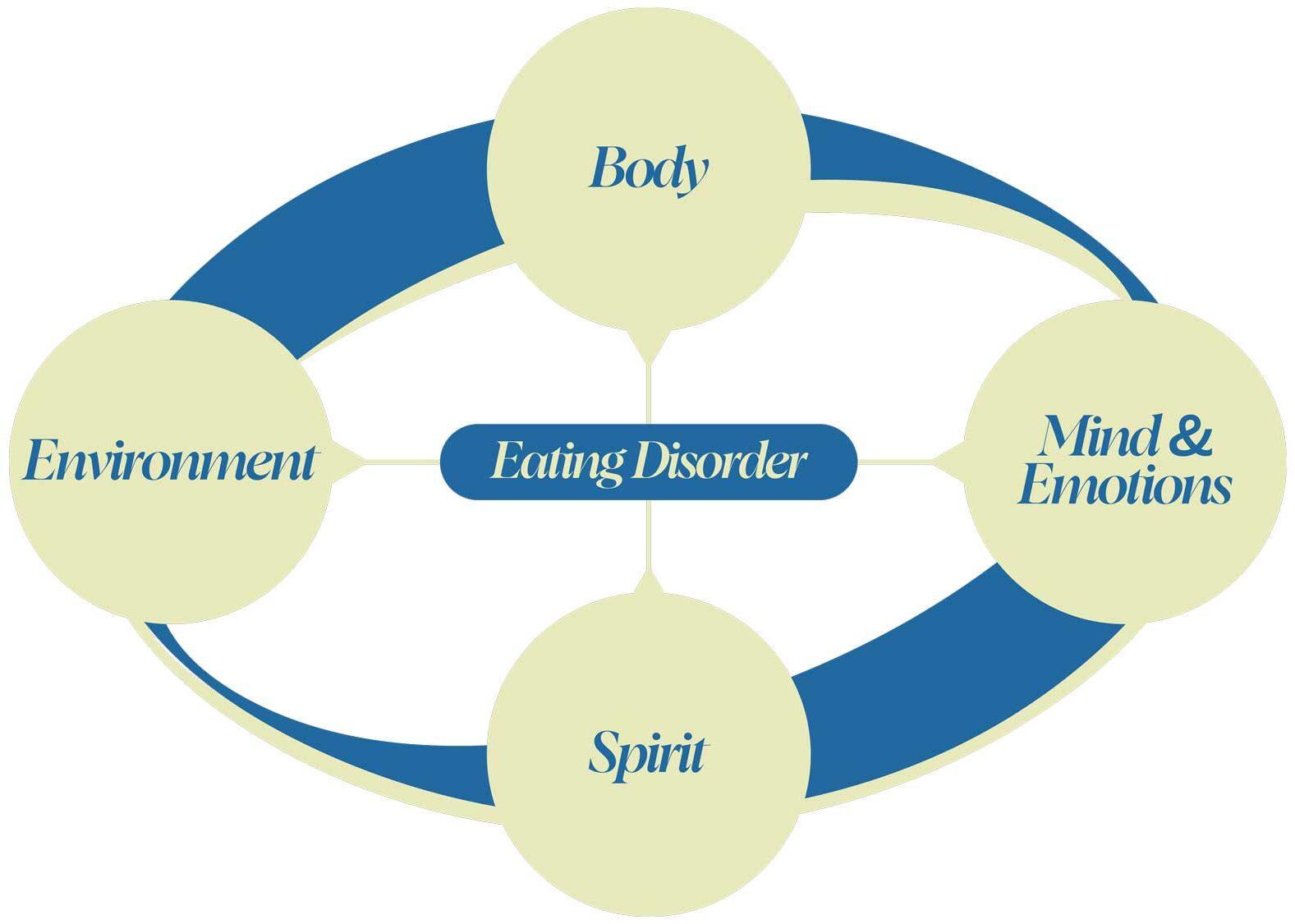
Eating disorders develop due to the interaction of any number of physical, emotional, psychological, social, cultural and/or spiritual factors. Each person’s story is different – there is no ‘one size fits all’ approach. However, a variety of factors can increase the risk of developing an eating disorder. Select each “+” icon on the diagram below to see some examples.
Some people who have experienced eating disorders explain that these factors combined to create a sense that they were not ‘enough’ – ‘good enough’ or ‘safe enough’. The eating disorder (sometimes subconsciously) promised to provide a sense of goodness, control and safety amidst uncertainty and shame. Yet, it ultimately failed to deliver.
‘I felt intense shame all the time. These narratives of, like, “I’m not enough, I’m a bad child, everything’s my fault”. And so, I already felt a lot of shame. And so then I would engage in this eating behaviour as a way of, like, trying to feel a sense of control over these emotions that felt very frightening. But…in the end…it was sort of like, reaffirming, “Yes, you are bad, you are disgusting, you are terrible.”
The NEDC offers helpful information about some early warning signs of eating disorders. It is important not to ignore these, but instead to seek appropriate support.
Body (Biological):
Spirit (Religious/Spiritual):
Environment (Social):