What are Some Effects of Having an Eating Disorder?

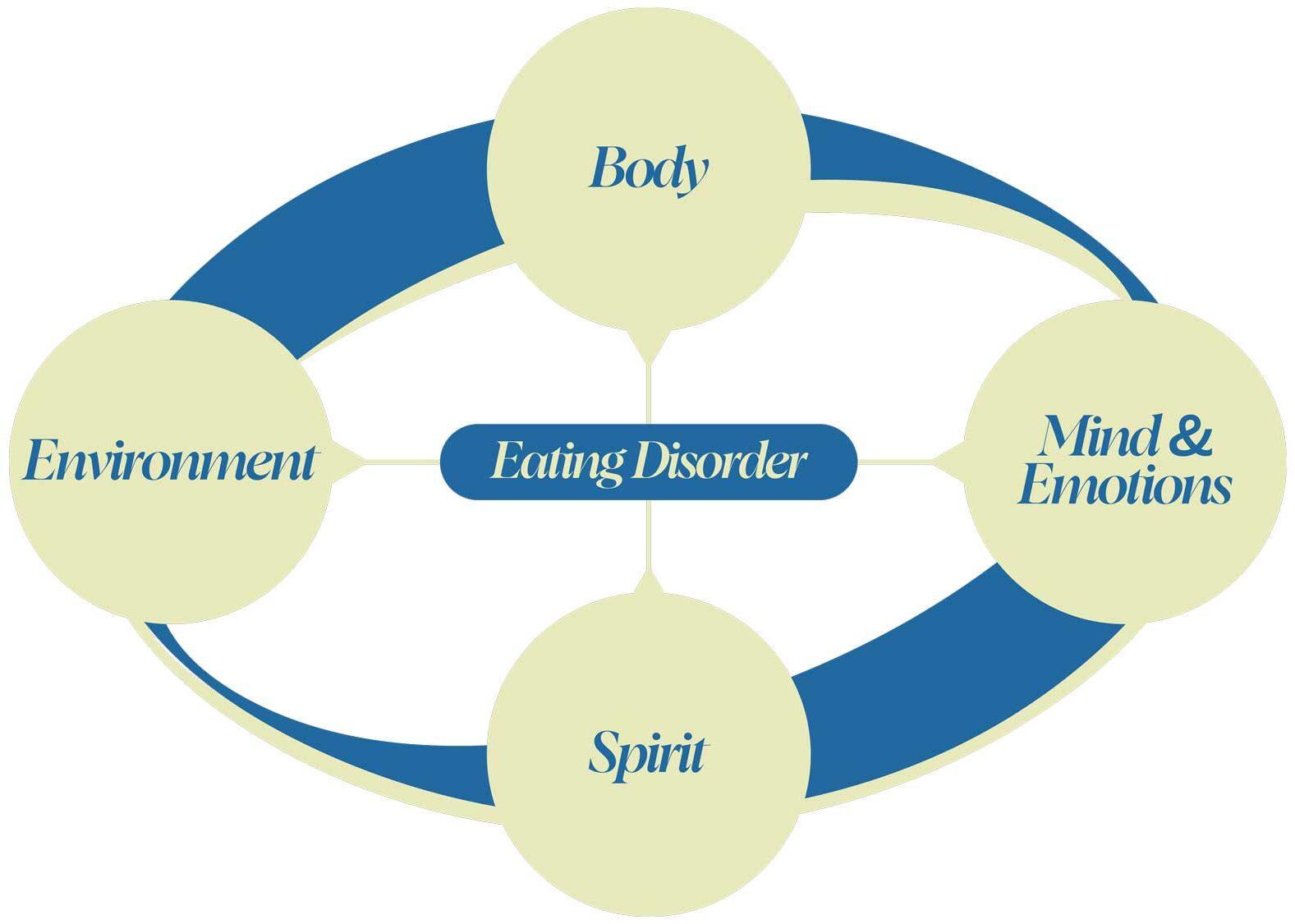
Eating disorders have many significant effects. These can include impacts upon a person’s body, mind, relationships and spirit. Select the “+” icons on the diagram below to see some examples.

‘I cannot in anyway accurately describe the despair of being so trapped in your mind and body. I would collapse on my bedroom floor everyday uncontrollably crying, screaming my heart out, trying my absolute hardest to wish myself out of life. How can something so loud and world-consuming be silent to everyone else?’

Vicious cycle

Whatever the reason an eating disorder has started, its effects can create a self-perpetuating cycle. This can make it very difficult to recover.
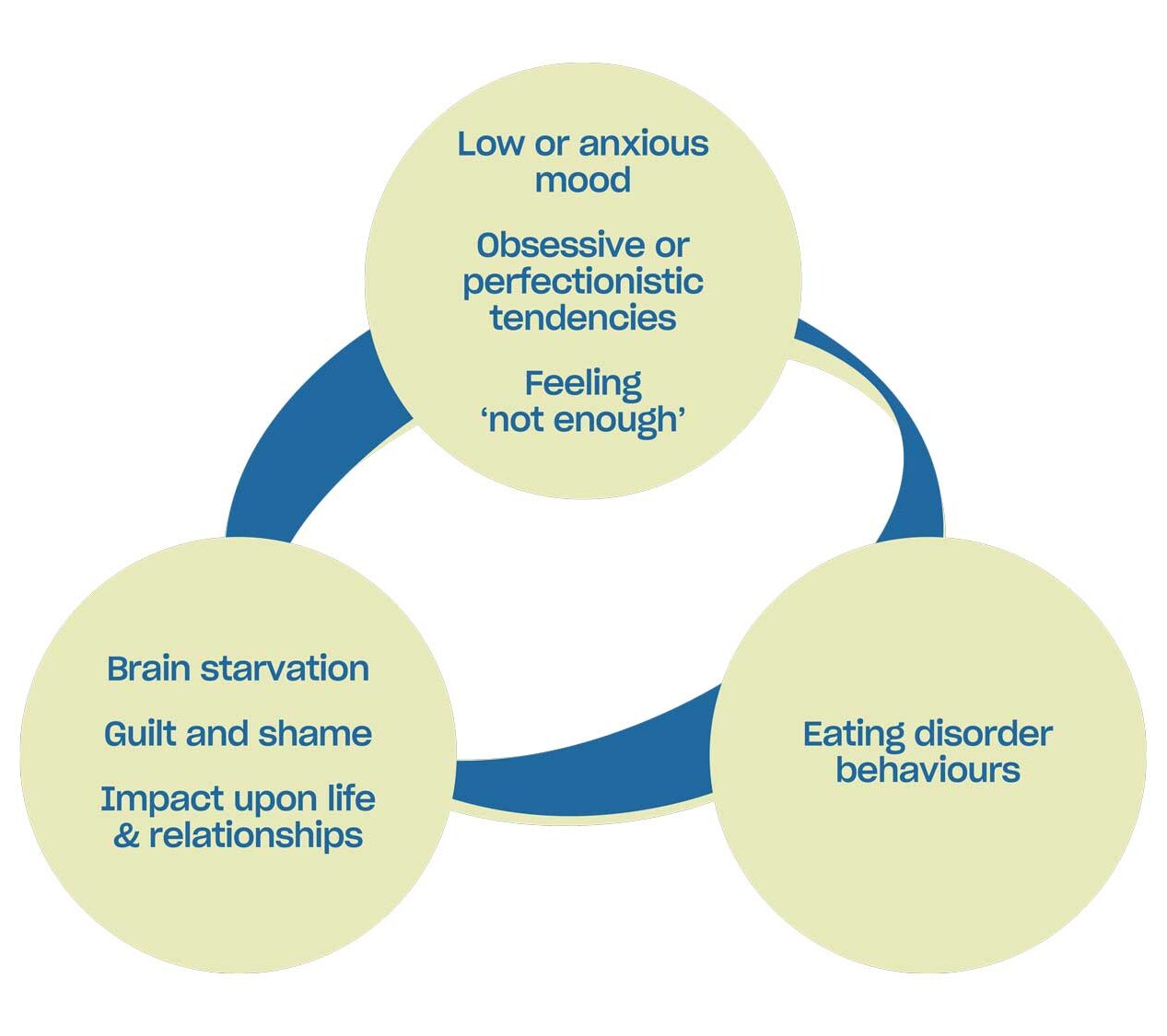
‘What to me started out as losing a bit of weight suddenly seems to gain traction, and it becomes…something of the mind really…Everything was about lessening the amount of food I put in my body. And…it just becomes all controlling…It was almost like if you put food in your body, you would be poisoning your body…You lose everything, even your ability to laugh because you have no energy. I couldn’t laugh. I couldn’t do anything. I was silent, you know. And your voice, your hair falls out, I lost my period. For years…bruises just appeared all over your body…It’s honestly, it’s like your brain becomes this, it’s like a…computer control, you know, it’s like big brother in your head, and nothing, the way I saw myself was…completely distorted…I would see myself as a fat person…I would look in the mirror every day and I would not see someone who was very thin. And [the eating disorder] would tell me all the time if I ate that, then I would really be really big.’

Can Starvation Itself Cause the Types of Behaviours We See in Eating Disorders?

Starvation has a profound impact on the brain. This explains many of the thinking patterns that are common in people with eating disorders who limit their food intake. These patterns can make it very difficult to recover. Watch the video below to learn more.

  1. Bonaccorsi V, Romeo VM. Psychological and Psychiatric Consequences of Prolonged Fasting: Neurobiological, Clinical, and Therapeutic Perspectives. Nutrients [Internet]. 2026; 18(1):[60 p.].
  2. Barakat S, McLean SA, Bryant E, et al. Risk factors for eating disorders: findings from a rapid review. Journal of Eating Disorders. 2023;11(1):8. doi: 10.1186/s40337-022-00717-4.
  3. Nickel K, Maier S, Endres D, et al. Systematic Review: Overlap Between Eating, Autism Spectrum, and Attention-Deficit/Hyperactivity Disorder. Frontiers in Psychiatry. 2019;Volume 10 – 2019.
  4. Gaudiani JL. Sick enough: A guide to the medical complications of eating disorders. 1st ed. New York: Routledge; 2018.
  5. American Psychiatric Association. Diagnostic and statistical manual of mental disorders: DSM-V-TR. 5th, text revision ed. Washington, DC American Psychiatric Association Publishing; 2022.
  6. Zipfel S, Giel KE, Bulik CM, et al. Anorexia nervosa: aetiology, assessment, and treatment. Lancet Psychiatry. 2015;2(12):1099-1111. doi: 10.1016/S2215-0366(15)00356-9.
  7. Monteleone AM, Cascino G. A systematic review of network analysis studies in eating disorders: Is time to broaden the core psychopathology to non specific symptoms. European Eating Disorders Review. 2021;29(4):531-547. doi: 10.1002/erv.2834.
  8. Froreich FV, Vartanian LR, Grisham JR, et al. Dimensions of control and their relation to disordered eating behaviours and obsessive-compulsive symptoms. (2050-2974 (Print)).
  9. Solmi M, Collantoni E, Meneguzzo P, et al. Network analysis of specific psychopathology and psychiatric symptoms in patients with eating disorders. International Journal of Eating Disorders. 2018;51(7):680-692. doi: https://doi.org/10.1002/eat.22884.
  10. van Hoeken D, Hoek HW. Review of the burden of eating disorders: mortality, disability, costs, quality of life, and family burden. (1473-6578 (Electronic)).

Body (Biological):⁴

  • Fatigue
  • Cold sensitivity
  • Weak bones, fractures
  • Thin skin and hair, easy bruising, muscle wasting
  • Loss of periods (in females), low libido
  • Nausea, bloating, abdominal pain, constipation
  • Tears to the oesophagus (food pipe) or stomach
  • Dental erosions
  • Abnormal heart rhythm and sudden cardiac death (a common cause of death in eating disorders)
  • Major organ failure (such as kidney or heart failure)

Mind (Psychological):⁵

  • Low mood 
  • Irritability
  • Obsessiveness
  • Inflexible thinking
  • Difficulty sleeping
  • Difficulty recognising, regulating and/or displaying emotions⁶
  • Sense of lacking control and being worthless (‘ineffectiveness’)⁷⁻⁸
  • Disturbed awareness of bodily sensations⁷
  • Suicidal thoughts

Spirit (Religious/Spiritual):

  • Effect on engagement in religious activities
  • Spiritual struggles with self (guilt or shame, for example)
  • Spiritual struggles with God (anger and doubt, for example)
  • Spiritual struggles with faith community (feeling misunderstood or abandoned, for example)

Environment (Social):

  • Social isolation⁵
  • Interpersonal problems⁹
  • Reduced ability to engage in normal activities (such as work or study)¹⁰
  • Financial stress¹⁰